AI Shopping Assistants: How To Buy Furniture In 2026

Imagine having access to all retailers in one place. No tabs to switch, no prices to compare, instantly seeing the items that suit your needs and rooms, and directly visualizing it in your home. This - and more - is what AI furniture shopping assistants promise to do - and some actually really can do.
Why furniture shopping is broken
Sourcing furniture and decor is time-consuming; algorithms repeatedly surface the same heavily advertised retailers, while price comparison feels like juggling eight tabs at once.
If you don’t want IKEA or Amazon it’s hard to actually find the right item that suits your need and wallet. Online furniture shopping is a biased e-commerce playing field which needs leveling. AI interior shopping assistants provide exactly that.
Why ChatGPT fails as your furniture shopping assistant
While the classic LLMs like ChatGPT, Perplexity and Claude are generalist models and capable of various generative tasks, they fall short as soon as it's about vertical niches like interior. Due to their generalist nature they only scratch at the surface as they aren’t able to access the deep product catalogues of retailers available. They lack crucial tools, access to product catalogues and specialization required for furniture shopping.
Shopping for a sofa is the best example - the process from inspiration to buying is non-linear. Customers visit many online furniture stores, rely on different sources and go from inspiration, to discovery and visualization to price comparisons and back to inspiration. And after many days, they maybe conduct the purchase. Furniture shopping requires spatial, visual, and commercial intelligence—not just text-based reasoning.
The Future of Home Decor Shopping: AI Furniture Shopping Assistants
Several AI-driven interior shopping tools are emerging, each tackling parts of the problem—search, visualization, or inspiration. However, most still operate in silos.
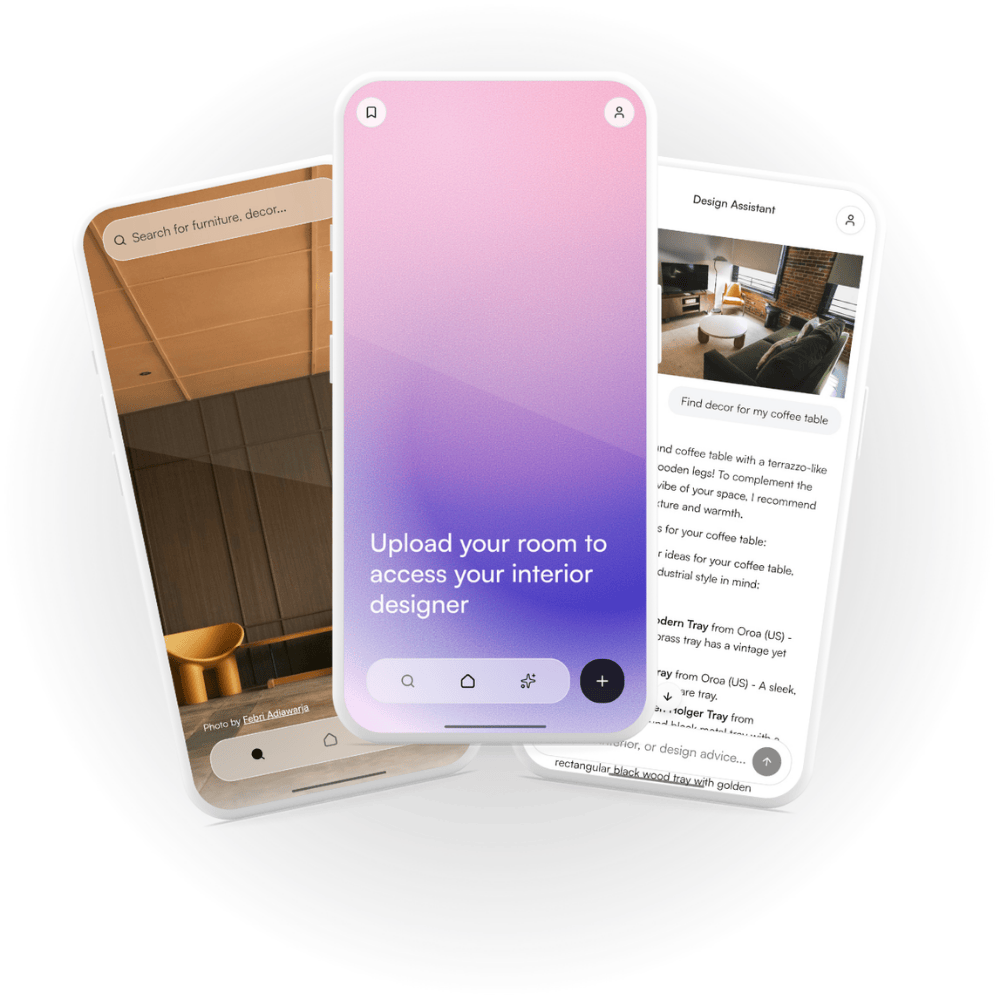
Lila.so is one of the first platforms attempting to unify all of these layers into a single experience, making it a pioneer of AI shopping assistants for interior. Its app tries to juggle all the balls for you - and does it impressively well.
Lila aggregates furniture, lights, art and decor from over 100 global retailers, and especially serve all stages of the online shopping journey—from inspiration to discovery, visualization, and purchase—in a way that was previously impossible without AI.
I see two reasons why AI for furniture shopping is the way: The end of effort and the power of personalization. Let me break down what this means in terms of benefits for today’s customers:
I. The end of efforts
It’s all about your Space
The entire process is centered on your space. Upload it, and you unlock your personal interior designer, which curates items for you - an inspirational section that provides interior curations that elevate your room. A simple approach but it is not common. And this becomes even more clear in regards of visualizing products in your room.
All interior retailers in one place
Lila’s product catalogue is made up of 100 global retailers like Connox, Design Bestseller, Archiproducts, KARE, Homary and many more. Instead of searching all their websites, just describe what you need (e.g. „A mid-century walnut table with drawers for 600$“) and you see all products at once of all retailers that ship to your location. Semantic search is the key here. You don’t need to know brands, product names or retailers.
Instant Global Price Comparison
The Geolocation feature also unlocks a price comparison feature. Many retailers have the same item in their product catalogue but differing prices. By accessing retailers that are located outside of your country, but ship to yours, may give you the most affordable pieces.
II. Power of personalization
Better Product Visualization than AR
Ever found yourself asking if that item really fits your room? Lila lets you place any item of their catalogue in your room with realistic, lifelike image generation that is on the level of the best interior design tools.
Large players like IKEA and Wayfair allow you to see their items in their room - but the tech is gatekept to smaller retailers who don’t have the resources to provide product visualization as 3D product modeling is expensive.
Lila goes a modern, convenient way by utilizing their interior design AI to see any product in your room.
Curated for you
With a product catalogue of over 1M items, the sheer choice can be overwhelming. This is where the assistant is put to work. The Lila Assistant is your interior design advisor that can take a look at your room if you like, and understand your problems or needs to curate the right items for you.
Creator economy and shoppable inspiration
If you would like to go back to inspiration, Lila partners with interior creators to give you personalized inspiration - which also restores the creator to consumer economy that is experiencing a decay due to AI slop content. The Lila feed provides shoppable interior inspiration based on real interior design content.
By the way - if you are an interior designer or interior creator, Lila is looking for interior creators to partner with. Its inspirational feed serves furniture shoppers while simultaneously providing a valuable revenue source for its partners.
The interconnectivity of shopping and AI-assistance is becoming the next evolutionary step of interior shopping. It allows customers to not only stop overspending on furniture but allows to go beyond major generalist interior retailers like IKEA, Wayfair or Amazon to really find pieces that create a curated space and aesthetics that are unique to your room.
AI Interior Shopping Assistants save you time and money
Where a costly interior designer was once utilized, AI interior shopping assistants step up with tools that serve online furniture buyer’s needs with new tech, creating an easy to navigate shopping experience. In an interior e-commerce market where it’s about ad spends, attention grabbing and forcing items upon the customer by increasing frequency of visibility, the AI assistance of furniture, decor, lights and art shopping is the much needed expression of the real purpose that AI should serve: enhancing day to day life and giving back free-time that can be spent on other nice things - for example actually chilling in the perfect couch for your space instead of window shopping for weeks.
AI interior shopping assistants will redefine how people discover, visualize, and buy furniture online. Want to participate? Try Lila.so